Product Introduction
What is Guance?
Guance provides a one-stop observability solution for cloud, cloud-native, application, and business environments. Its features include Infrastructure Monitoring, Log Analysis, Application Performance Monitoring (APM), Real User Monitoring (RUM), Synthetic Monitoring, Security Monitoring, Agent Monitoring, and CI environment insights, helping you achieve comprehensive cloud, cloud-native, application, and business observability.
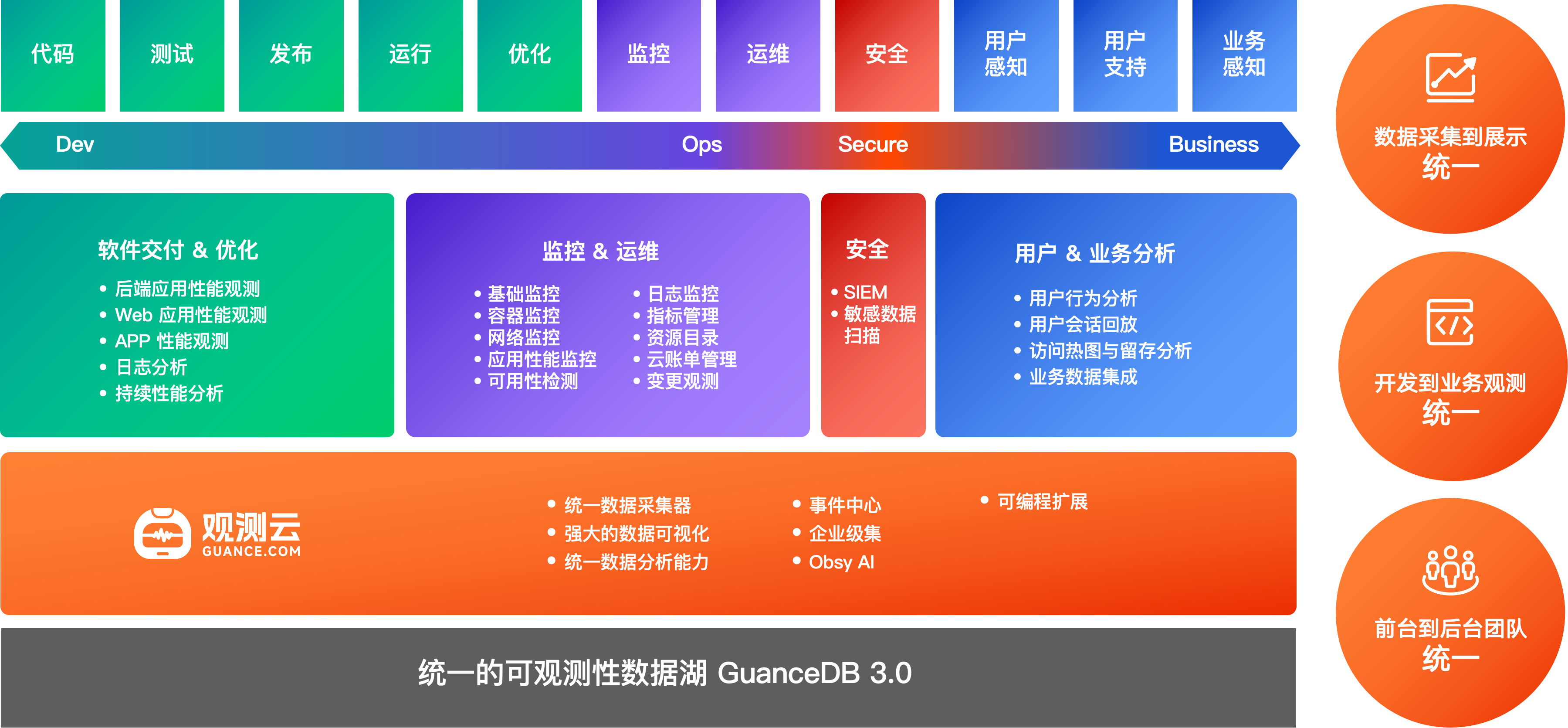
Guance was initiated in 2018, and after five years of careful development by a professional team, it was officially released on April 28, 2022. Since its release, we have maintained a regular release cadence, actively collected user feedback, and continuously improved technology stack coverage, user experience, and platform stability. We provide enterprises with an intelligent monitoring cloud service for the AI era, helping them quickly achieve system observability and stable business growth.
Core Features
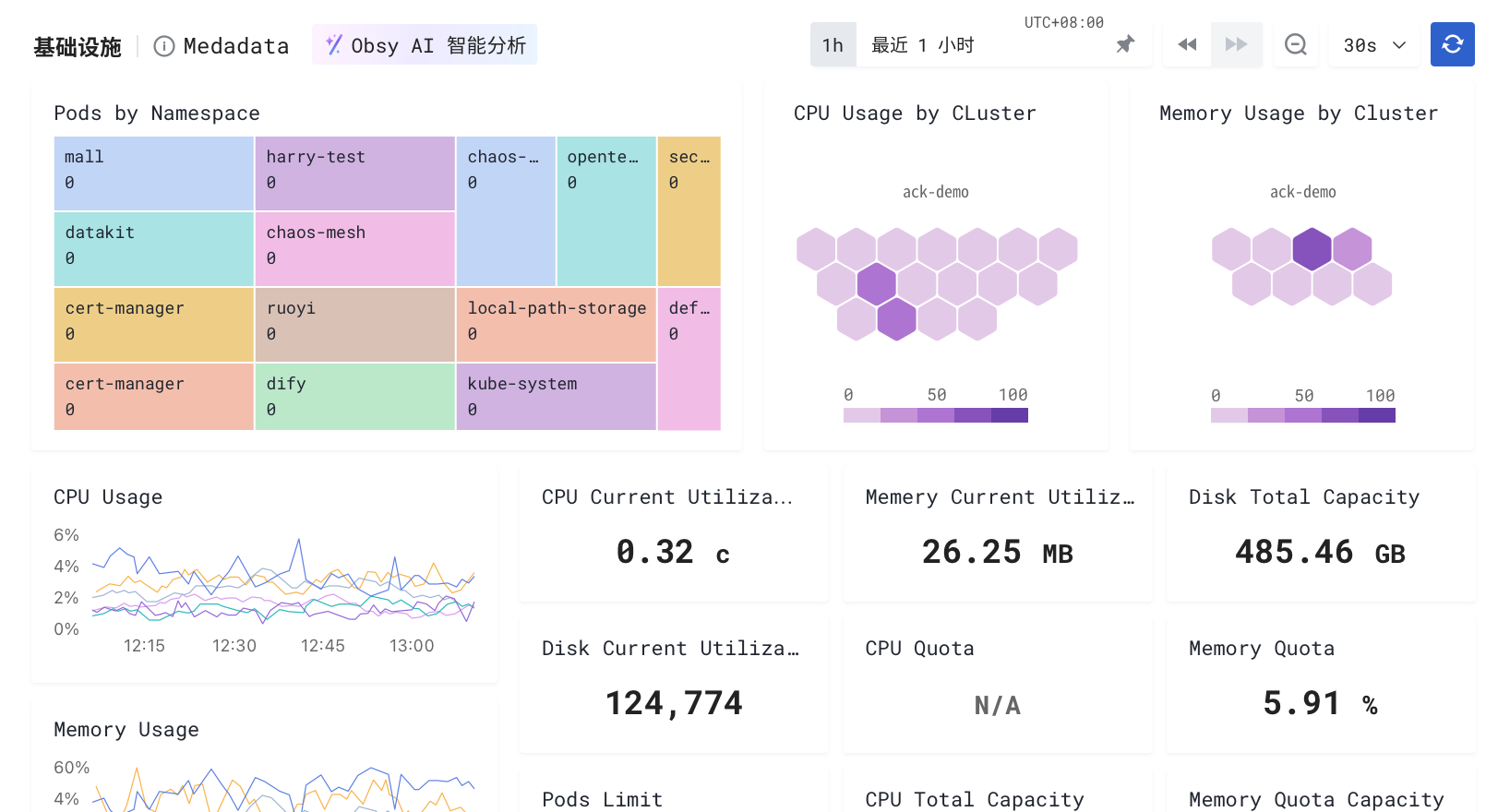
Infrastructure monitoring for hosts, cloud environments, containers, processes, and networks, covering IoT, multi-cloud environments, virtualization, microservices, and other IT infrastructure. It supports custom infrastructure objects, making it easy to observe any infrastructure resource.
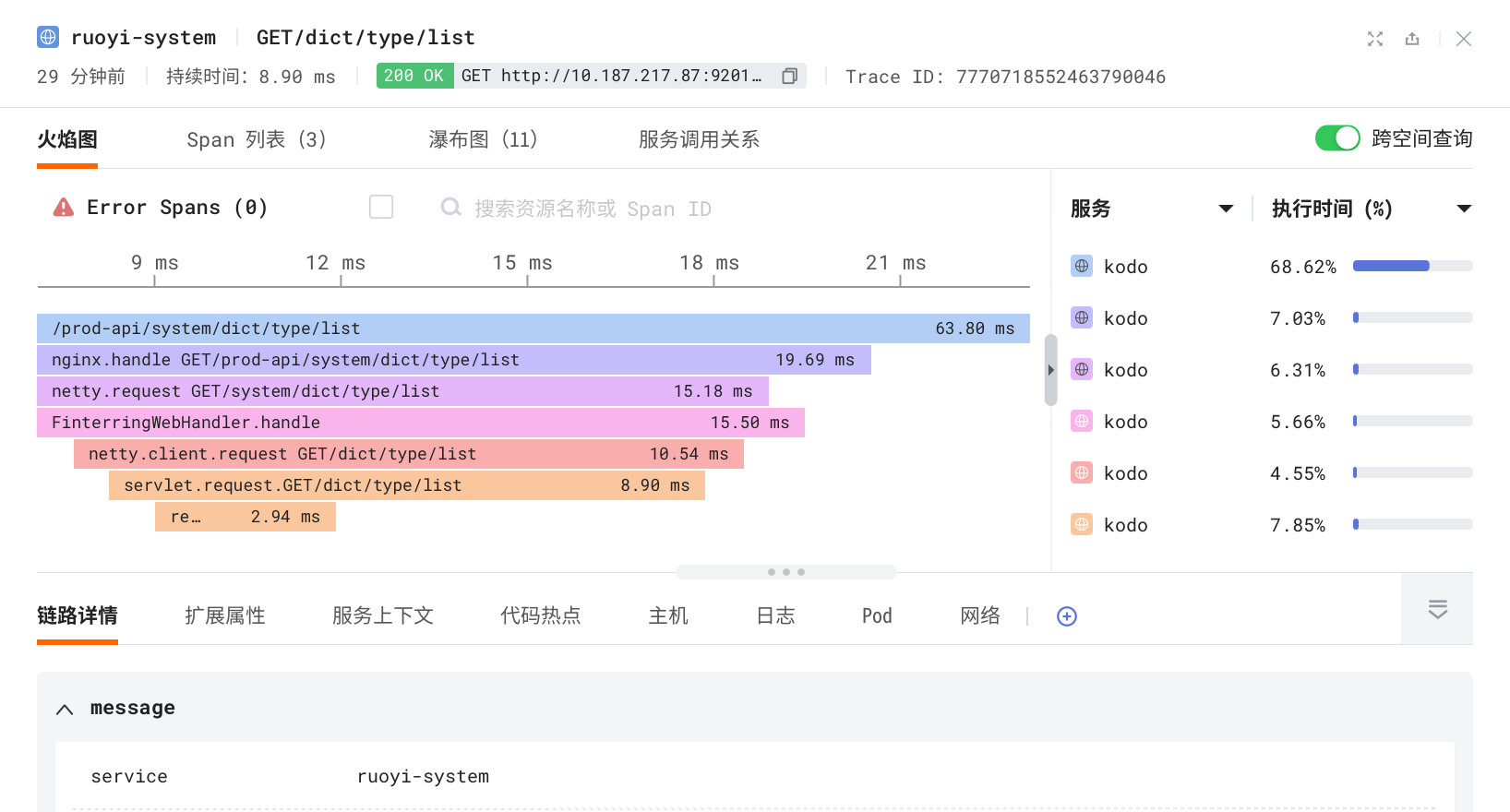
Comprehensive performance insights with end-to-end service monitoring. Built-in Flame Graph and Profiling tools let developers visually identify slow queries and resource consumption hotspots, helping to optimize business experience.
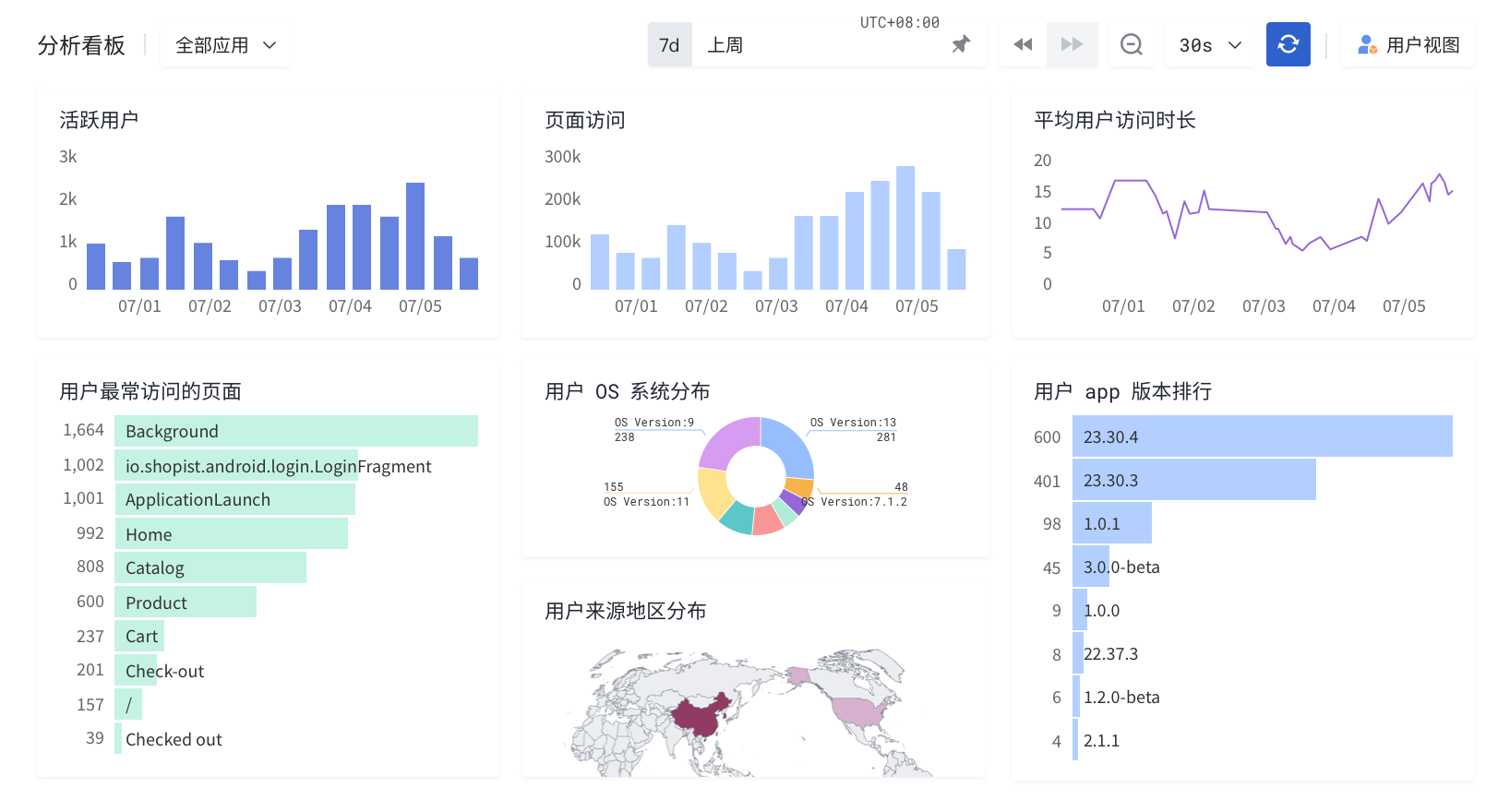
RUM collects data about real user experience and behavior when interacting with websites and applications, identifies the real needs behind each request, and optimizes product performance.
Guance supports multiple RUM types, including Web, mobile (Android & iOS), and Mini Programs.
All logs are aggregated into the Guance platform, enabling cross-system, one-stop search and rapid problem location. Whether for a single issue or an overall anomaly, you can investigate in context and quickly detect and resolve problems.
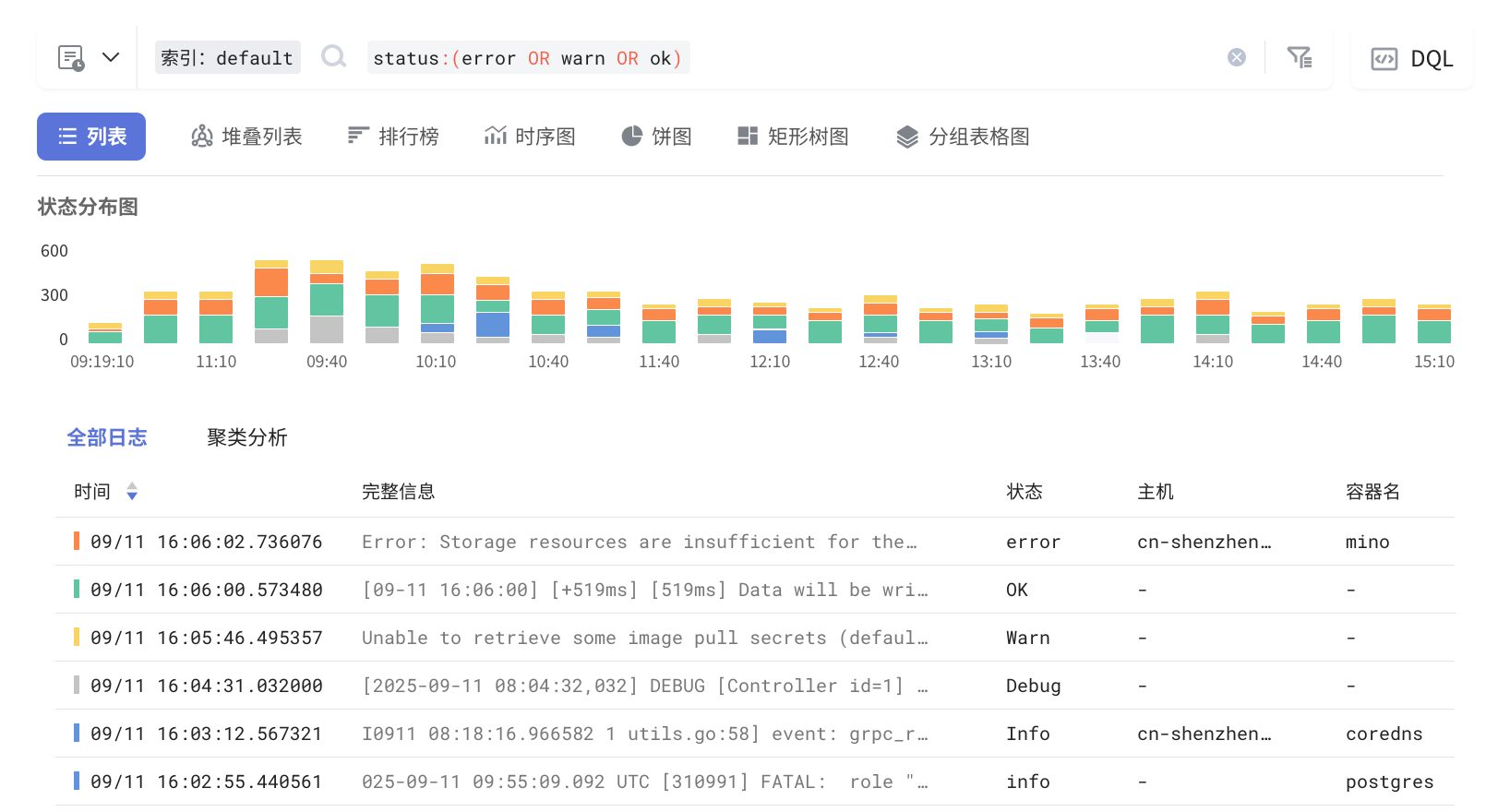
By integrating the two core capabilities of CSPM and SIEM, it helps you build an integrated security monitoring system of "assets ➛ configuration ➛ behavior".
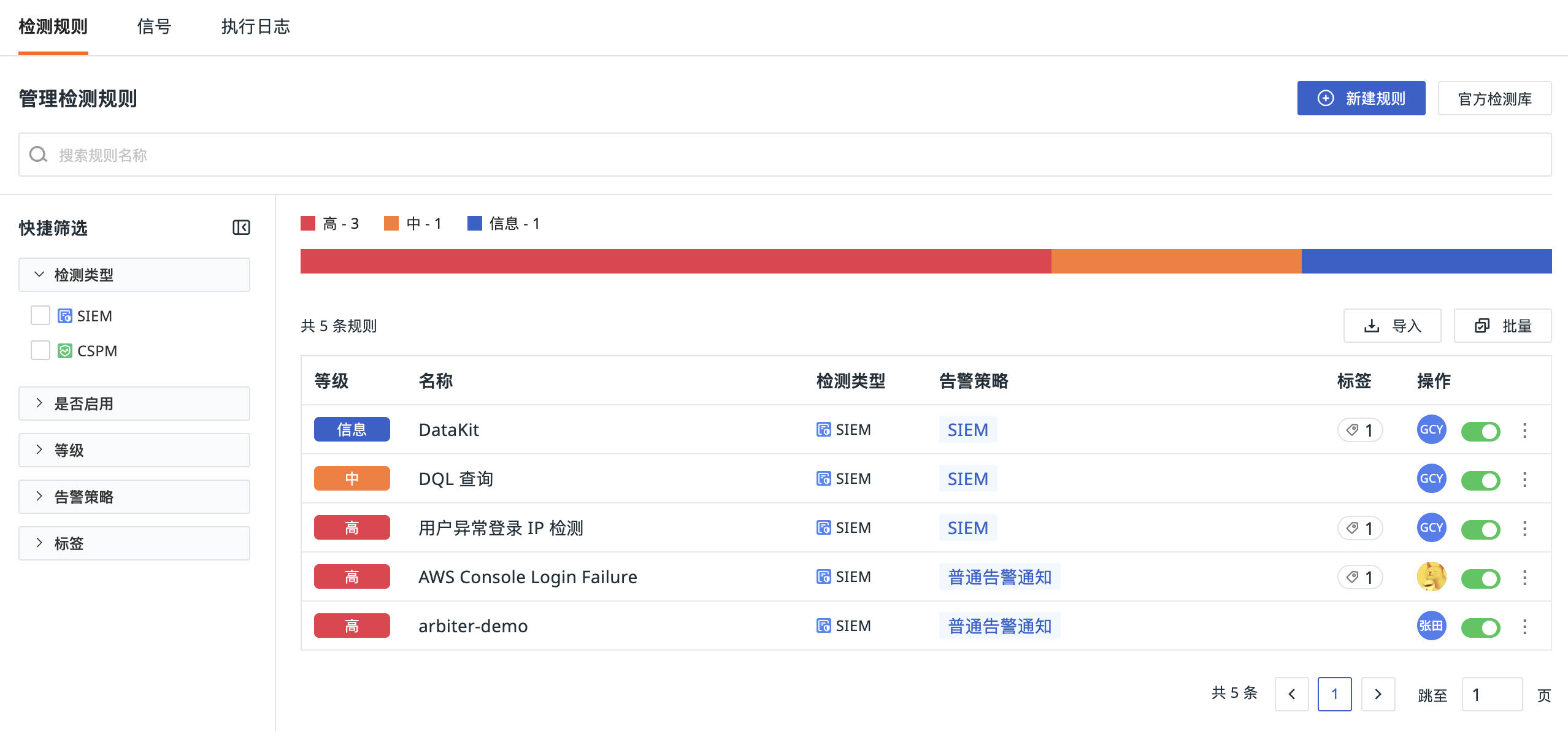
Agent Monitoring correlates Agent requests with the entire application trace, tracks the complete flow of every conversation, and precisely measures the number of tokens consumed by each generation task.
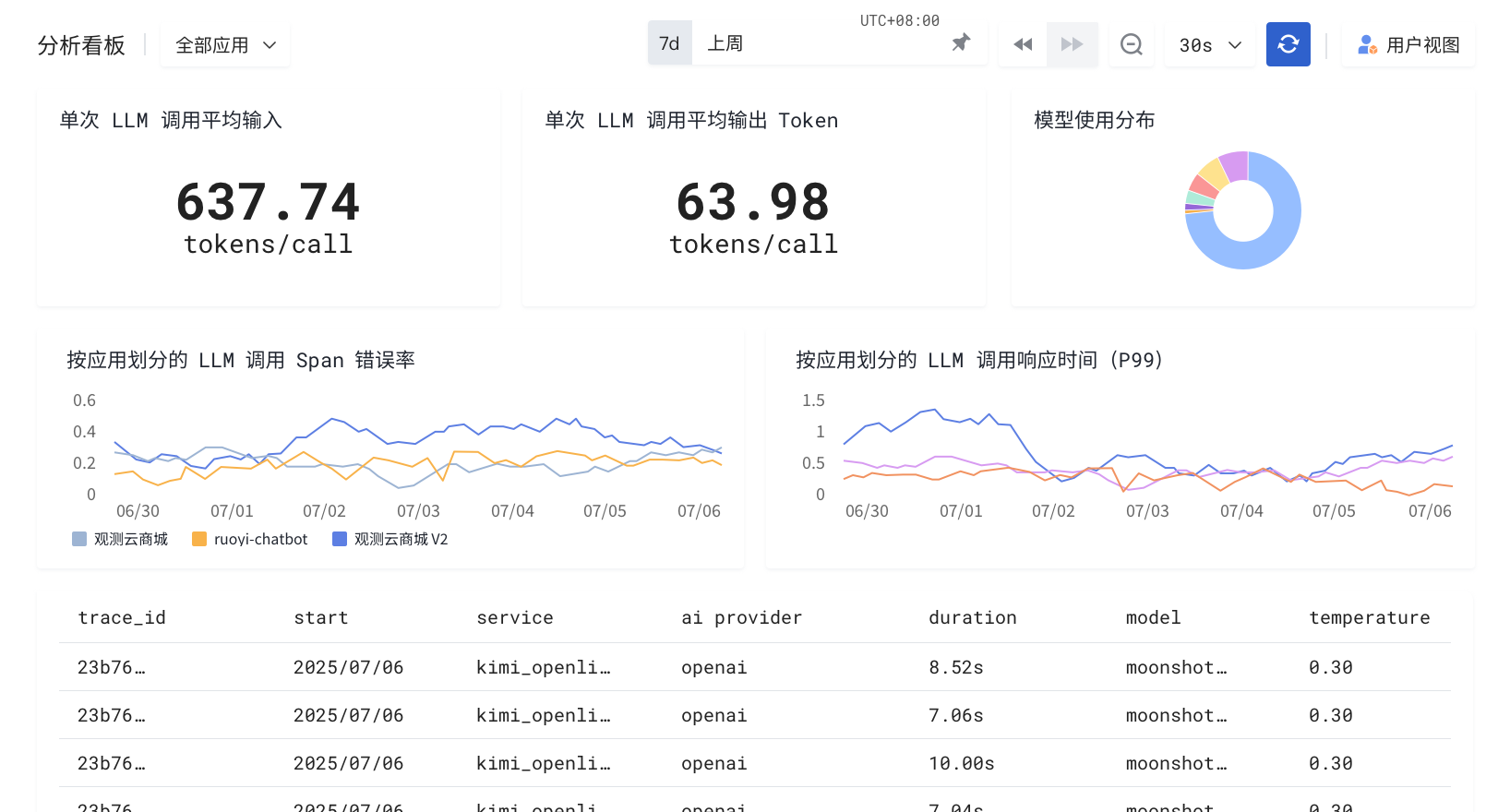
Guance supports custom detection rules for Monitors and includes 700+ out-of-the-box monitor templates. By configuring detection rules, trigger conditions, and event notifications, you can receive alert notifications immediately, detect issues in time, and resolve them promptly.
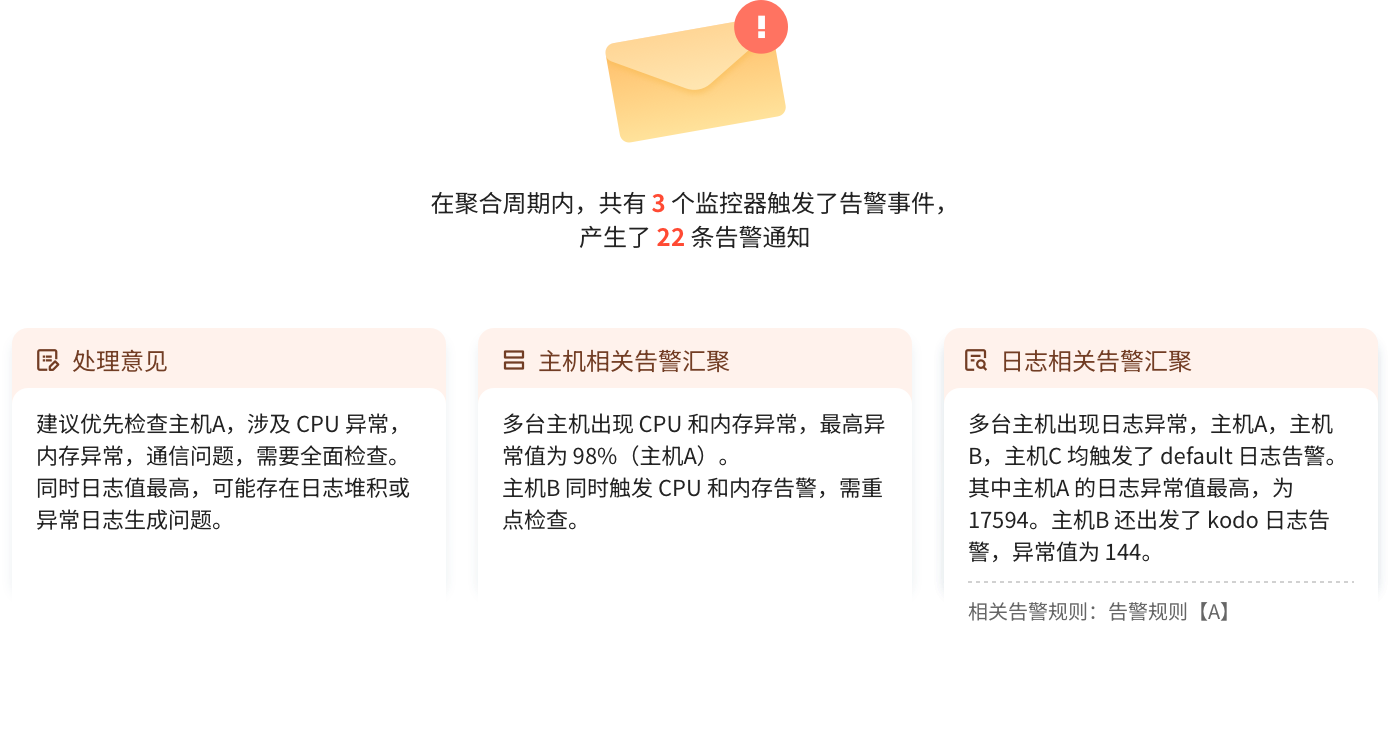
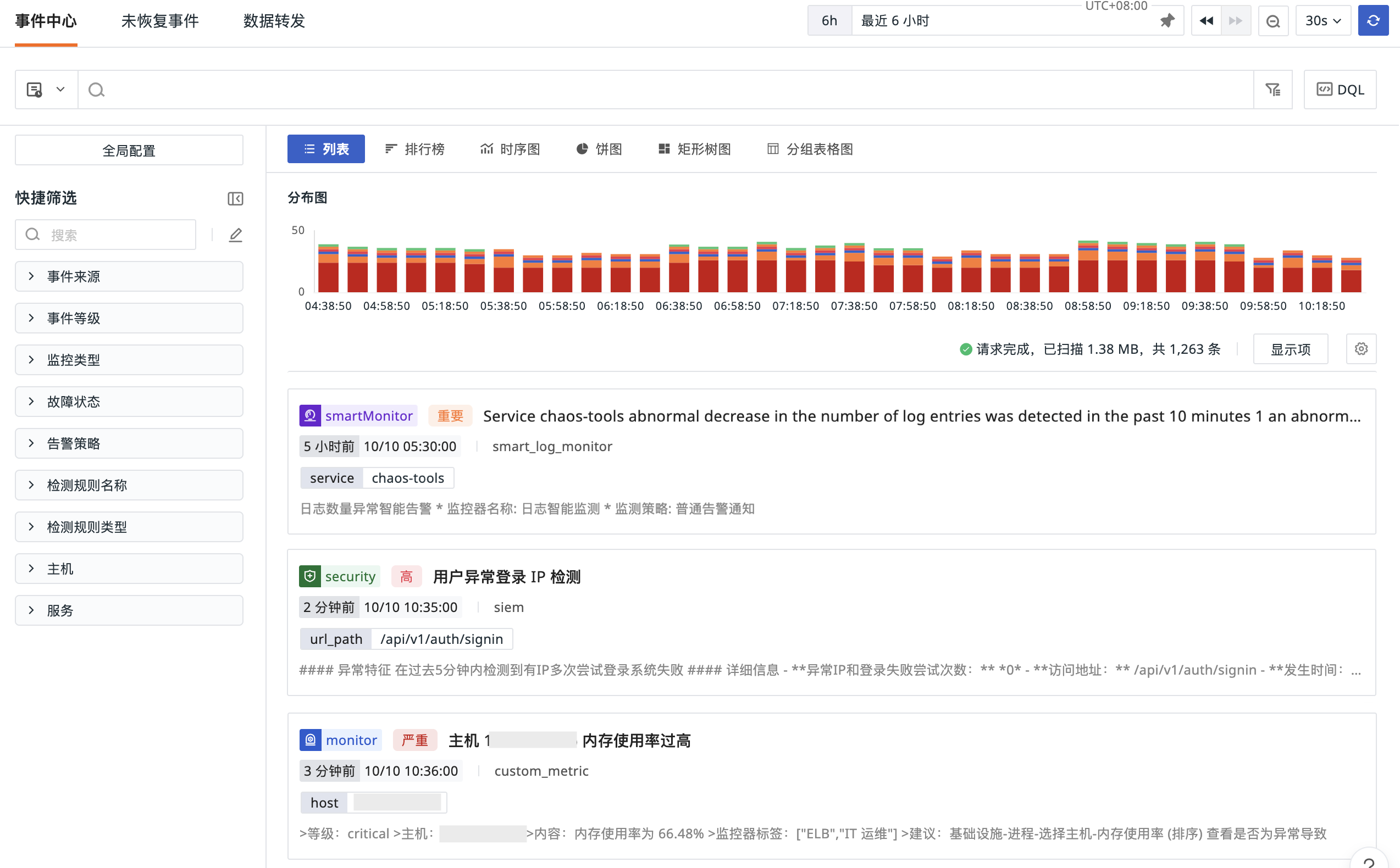
The Event Center aggregates event data from multiple sources, including Monitors, Smart Monitoring, Security Monitoring, and SLO. Through the centralized Event Explorer, you can quickly locate anomalies, track system changes, and improve incident response efficiency.
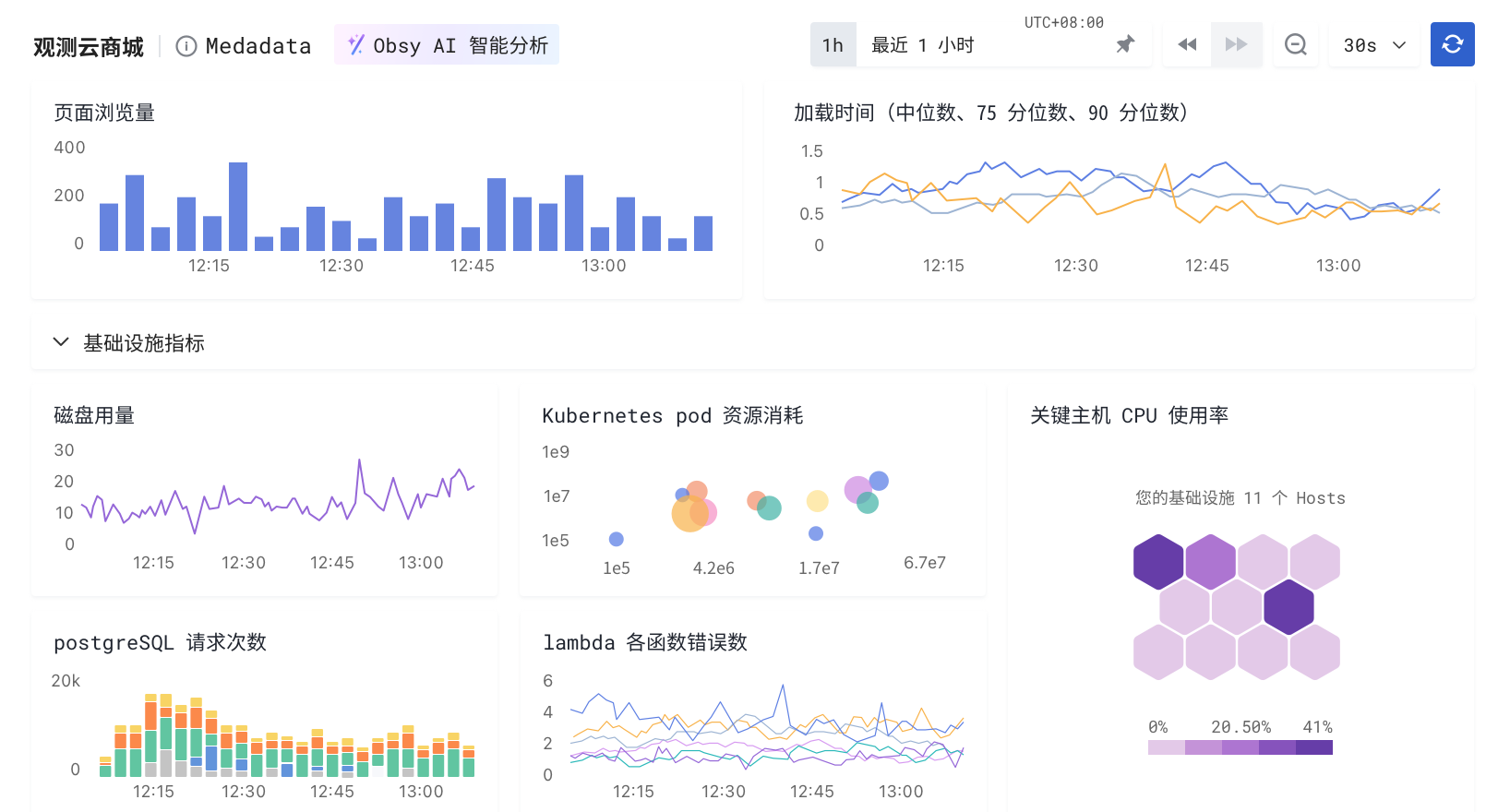
Guance includes 20+ standardized visualization charts and 200+ data monitoring view templates, so you can easily and quickly build dashboards based on business needs.
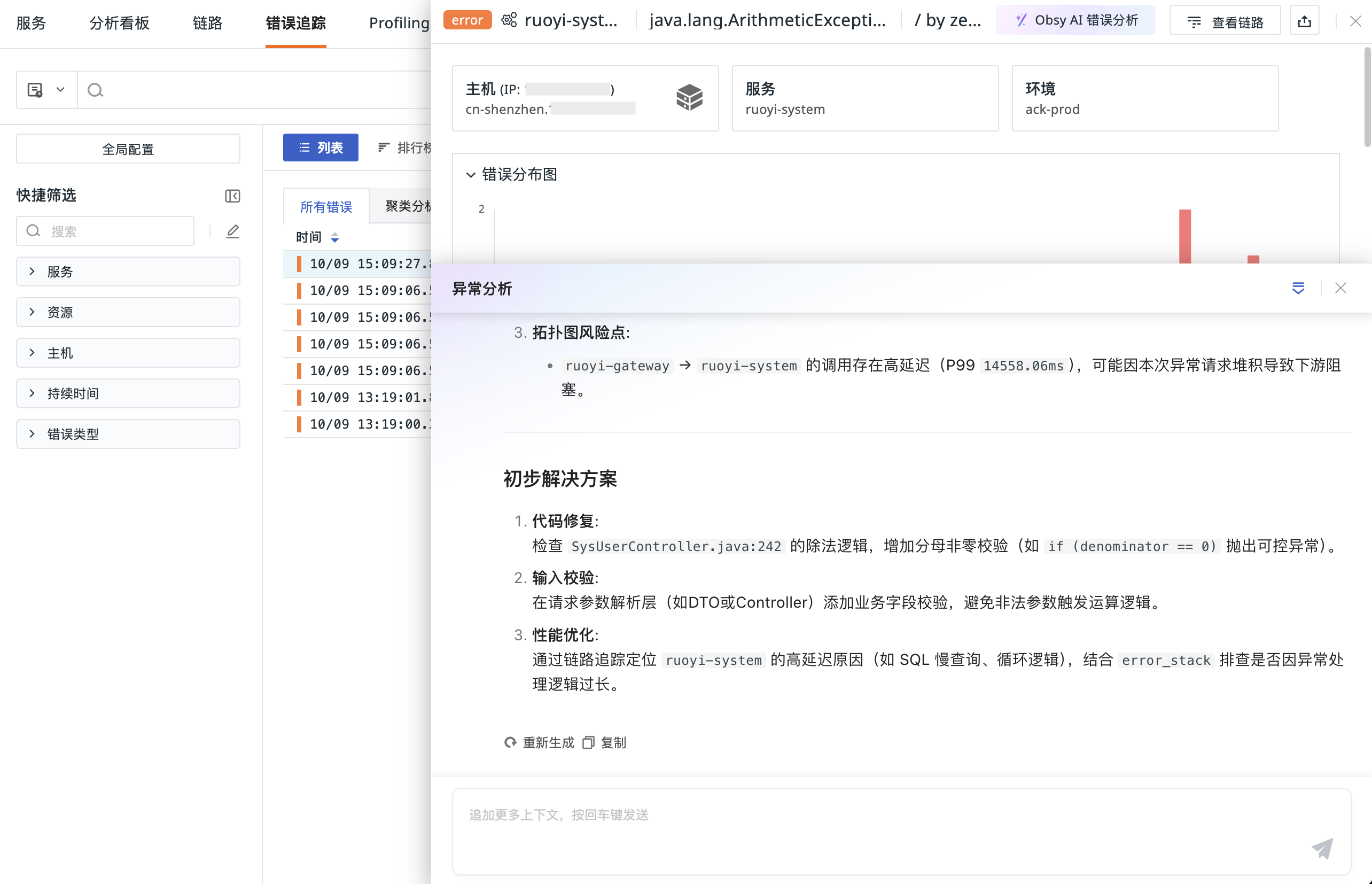
Obsy AI is built on advanced AI large models. Using natural language processing and machine learning, it efficiently processes data and quickly locates and resolves problems.
Key Technologies
1. Data storage technology based on time-series databases and columnar data
Time-series databases and columnar databases offer high compression ratios and superior write and query performance. On the write side, they can handle massive, high-frequency data write requests; on the read side, they support flexible multi-dimensional queries and correlation analysis.
2. Compatibility with multiple text analysis engines
Supports text analysis engine databases such as OpenSearch and Elasticsearch, enabling unified storage of data structures such as logs, objects, traces, and events. Through the Line Protocol and the unified Dataway interface, data writes are consistent, efficient, and low-latency. Unified query and analysis is performed using the self-developed query language Debug Query Language (DQL).
The supported SelectDB text analysis engine, designed for real-time analytical data warehousing, greatly improves data read/write performance and significantly reduces overall storage costs.
In addition, the latest self-developed GuanceDB 3.0 technology is fully cloud-native and runs on any commercial object storage. It is designed for massive data writes and a flexible architecture with complete separation of reads and writes.
3. Low-intrusion bypass data collection technology
Data collection is the initial phase of data analysis on big data platforms. Most of Guance's collectors use bypass technology to collect data, completing collection with minimal impact on business systems.
4. Data consistency guarantees and high system reliability
Along the entire chain from data collection to data cleaning to data processing, Guance uses message queue technology and multiple retry mechanisms to ensure data consistency, compensating for the weaknesses of time-series and columnar databases.
5. Cloud-Native
The entire platform is built on cloud-native products in terms of underlying technology module selection and overall architecture, delivering high cost-effectiveness while ensuring feature completeness and technical architecture reliability.
Cloud Provider Partnerships
Guance supports data ingestion from cloud providers such as AWS, Azure, Alibaba Cloud, Huawei Cloud, Tencent Cloud, Volcengine, and Google Cloud. No matter which cloud provider you use, you can quickly report data to Guance for unified management and analysis, including cloud resource management, cloud billing analysis, and more.
Guance also supports billing through cloud providers. Simply subscribe to Guance with one click in the cloud provider's marketplace to start using it, with pay-as-you-go billing and on-demand usage.