Native Direct Write Index
Native Direct Write Index allows specifying the target index for data writing directly during the data collection phase. Unlike log indexes automatically matched through filter conditions, the Native Direct Write Index requires the DataKit collector to explicitly specify the index name when reporting data.
How It Works
- When collecting data, the DataKit collector specifies the target index name through configuration;
- After data is reported to the workspace, the system routes directly to the corresponding index based on the index name;
- If the index name matching fails, the data will be discarded.
Use Cases
Native Direct Write Index is suitable for the following scenarios:
- Deterministic Routing: Ensures that data from specific sources enters the designated index, unaffected by the order of filter rules
- High-Performance Writing: Avoids the overhead of filter condition matching and routes directly to the target index
- Multi-Tenant Isolation: Different business lines use DataKit configurations to clearly distinguish data storage locations
Create
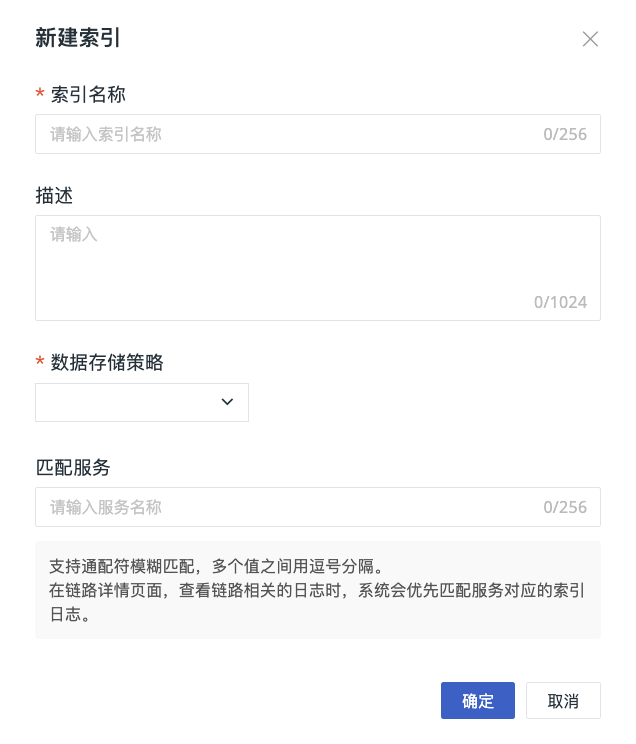
- Navigate to the Create Index > Native Direct Write Index page;
- Customize the index name (the DataKit collector will use this name to report data);
- Add a description as needed;
- Configure the data storage policy: select the log retention period, and data will be automatically cleaned up upon expiration;
- Confirm.
The original "Match Service" capability has been migrated to Log Index Mapping.
Notes
-
Name Consistency: The index name configured in DataKit must be exactly the same as the index name created in the console (case-sensitive), otherwise the data will be discarded;
-
Create Before Use: If the Native Direct Write Index is not created in the console, even if DataKit is configured, the data will be discarded;
-
No Filter Matching: The Native Direct Write Index does not configure filter conditions; it relies entirely on the index name specified by DataKit during reporting for routing.